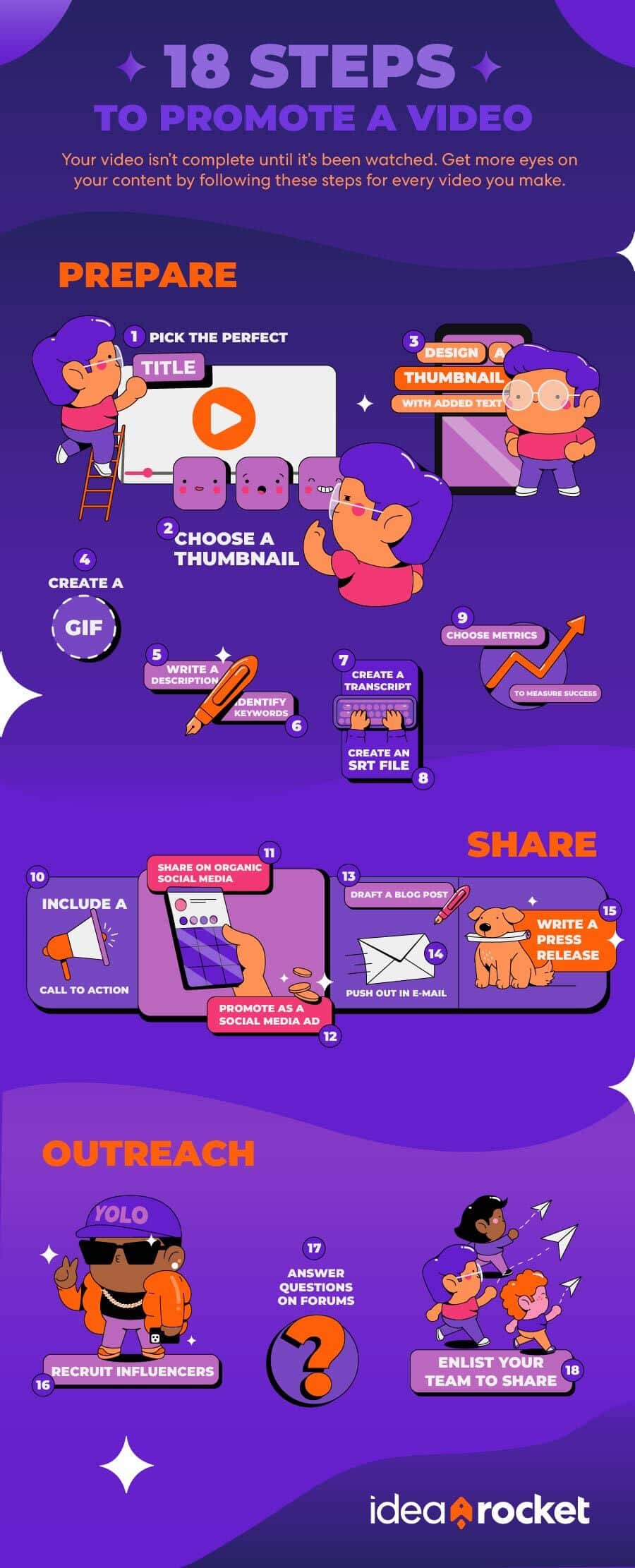
Creating a video is one thing. Making sure it gets seen is something else entirely. But a video has to be seen to be effective. Our Video Marketing Checklist offers 18 things you can do to make sure the right people find your video. The more of these video promotion strategies you use, the better your results are likely to be.
We’ve even organized it all into a fun infographic for easy reference. View and download the infographic below, then read on for more details on how to promote videos for maximum exposure.
Video Marketing Checklist Infographic
Phase 1: Prepare Your Marketing Assets
Before you share your video with the world, you need some supporting material. The right title, thumbnails, and other relevant pieces will help your video stand out on the algorithms. That increases the odds that it will be seen by your ideal customer.
1. Pick the Perfect Video Title
Short but descriptive. Smart but clear. Your video title has to accomplish a lot in just a few words. A strong video title should do at least one of the following:
- Make a promise that your video delivers.
- Ask a question that your video answers.
- Present a problem your video solves
When in doubt, aim for clarity over cleverness. Clickbait just annoys viewers and makes you seem unreliable. So make sure your video delivers on the promise made by your title. And yes, it will help if you include the kinds of keywords your customers use to search (for more on that, check out tip 6).
Examples of effective video titles:
- 18 Clever Ways to Promote Your Next Video
- Why is No One Watching Your Content and How to Fix it!
- Become a Video Promotion Pro in Just 10 Minutes
2. Choose An Eyecatching Thumbnail
Select a thumbnail image that invites people to click. It should be interesting and suggest a story in progress. You might even choose multiple video thumbnails to attract audiences on different platforms. Think of your thumbnail as a book cover. It needs to make people curious to learn more.
For example, which of these two images do you think makes a better thumbnail?
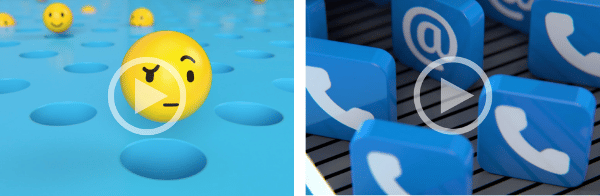
The first one draws you in. The emoji ball is confused. What’s he confused about? What are his friends in the background doing? You want to click to find out more. While both images are static, the first is clearly in the middle of a story. The second image needs more context to be effective, which means it’s probably not the best choice for a thumbnail.
Pro Tip: If your thumbnail is going to act as an image link (in an email, for example) you may want to do some quick photo editing to overlay a play button like in our examples above. This will let people know they can click through to your video. Free content creation tools can make this easy.
3. Design Your Thumbnail with Added Text
On platforms like YouTube, the best thumbnail designs include text that helps potential viewers understand what the video is about. You can use Canva or Photoshop to create text overlays that help your videos stand out. Check out these examples from TedEd.

Thumbnails with text are absolute musts on YouTube, which is the second-biggest search engine in the world! There, your videos will compete for viewer attention with only a thumbnail and title to help them stand out.
Pro Tip: You don’t have to use your full video title in your thumbnail image. In fact, it might be better not to. The thumbnail title should give an idea of the topic while the full title gives extra details that make people want to click. The image on the left above is a great example of this.
4. Create A Relevant GIF
You don’t absolutely need a GIF to promote your video, but it can be an eye-catching bonus. In email and on some social platforms, you can use a GIF in place of a thumbnail to draw attention to your video without autoplaying the full thing.

Pro Tip: Choose a section of the video that will work well as a loop and will also give the viewer some idea of what the video is about. Think of a GIF as a very short trailer for your video.
5. Write A Description
Craft a keyword-rich description that tells people what the video is about. If you plan to use it as a meta description, stick to between 50 and 160 words. If you’re using the text to accompany your video on social media, Youtube, or on your blog, you can expand it a little.
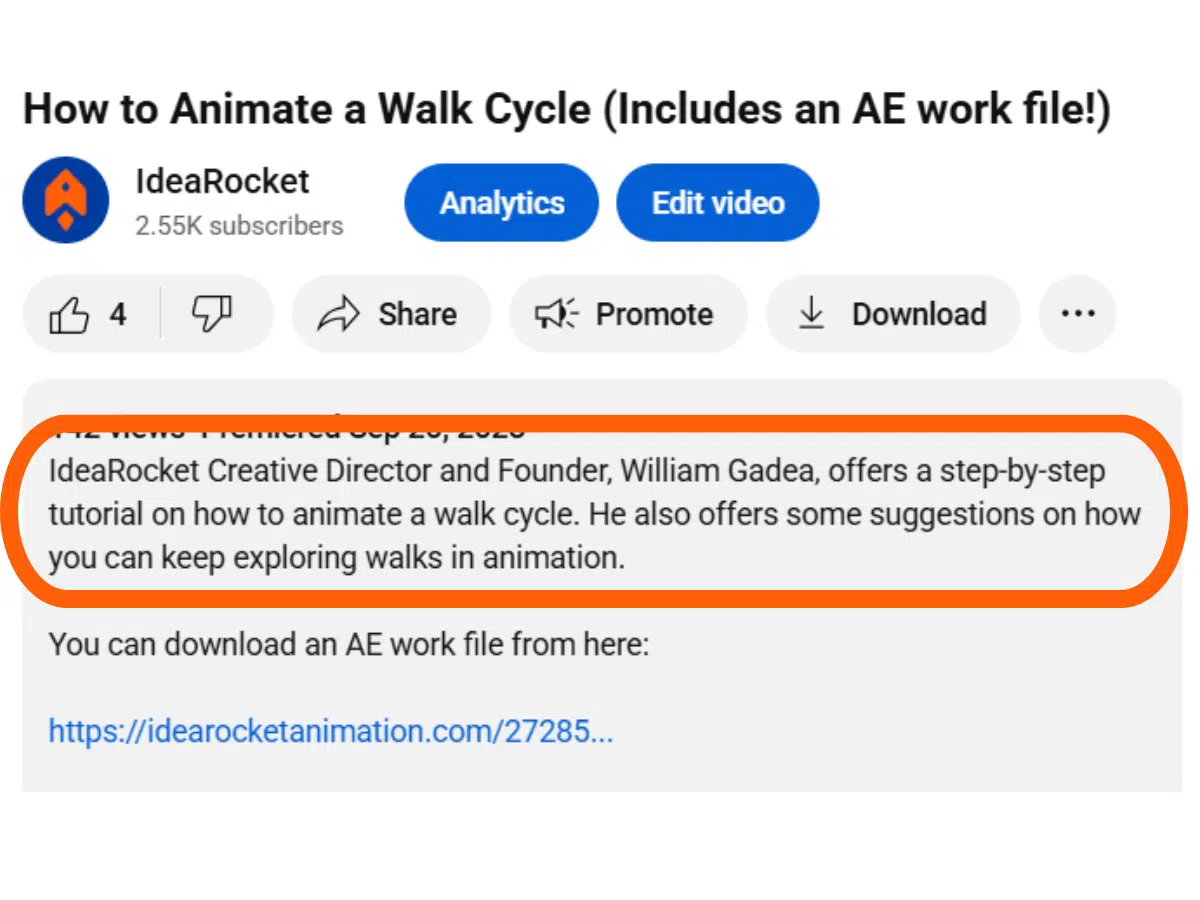
The example below is a description pulled from one of our YouTube videos. Notice how it tells you what to expect from the video. It also fits in some key phrases like “how to animate a walk cycle” and “walks in animation.”
Pro Tip: For some social media platforms the keywords in your description may work better as #hashtags. If you use hashtags, tailor them to better reflect what’s trending and relevant on each platform.
6. Identify Keywords
Speaking of keywords: What keywords or hashtags describe your video? These are the words someone might search for if they were looking for a video like yours. Use them in descriptions and social media posts to help people discover your video.
Having a ready-made list of these words will increase your visibility across different marketing platforms. Consider words that describe the video or the target audience. Different keywords may work best on specific platforms, but for now, just put together a list of words or phrases that might be useful.
Pro Tip: You can use keyword research tools like Semrush, RiteTag, or Google Search Console to find relevant keywords for your industry. Answer the Public is particularly effective at finding long-tail keywords.
7. Create a Transcript
A transcript makes your video more accessible, and not just for people with hearing impairments. Many people watch videos with the sound turned off, especially when they are on their phones in public areas.
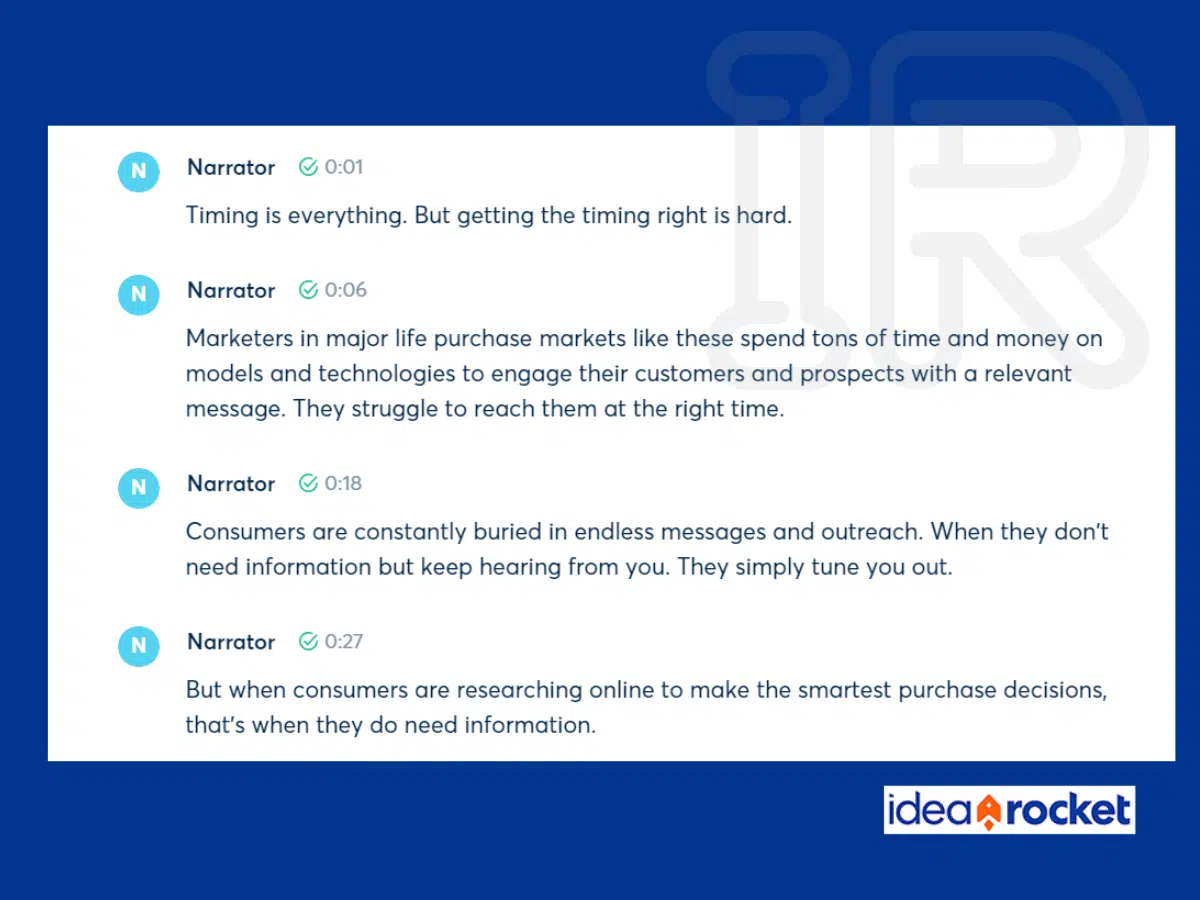
Including captions or uploading a transcript with your video helps viewers stay engaged. Transcripts can also make your video more discoverable by search engines. The example below shows a partial transcript with time signatures. Including timings like this allows search engines to serve the relevant part of your video in search results.
Pro Tip: Many video sharing platforms, including YouTube, Instagram and Facebook, offer automatic transcription. If you use this feature or other AI transcription tools, always double-check to catch any embarrassing errors.
8. Create an SRT File
An SRT file is a specially formatted text file that adds captions to your videos. YouTube, Vimeo, and some social media platforms let you upload custom SRT files with your videos. You’d need special software to create these files yourself. Fortunately, online services like REV.com can do it for you.
9. Choose Metrics
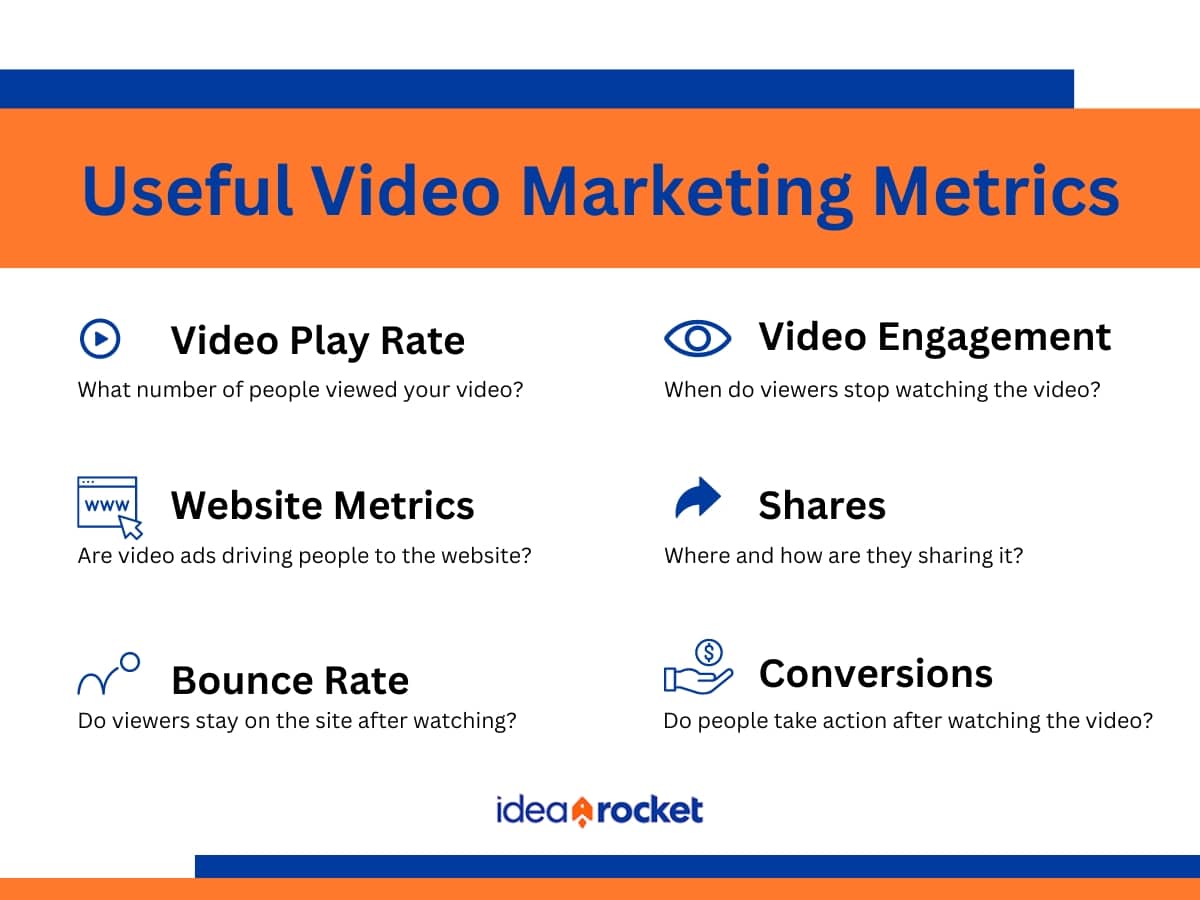
Decide which metrics are most important for measuring the success of your video. You might think that the most important metric is views, but that’s not always the case. Think about what you’re really trying to accomplish with this video. Often the true goal is conversions. The graphic below offers some useful video marketing metrics and their definitions.
Pro Tip: Hoping to go viral is not a strategy. Focus on measurable metrics that you can track. Then make thoughtful adjustments to achieve consistent growth.
Phase 2: Share Your Video Across Platforms
With all of the essential materials ready to go, you can start sharing your video across different marketing platforms. Steps 10 through 15 on our video marketing checklist help you get your video in front of as many viewers as possible.
10. Include a Call To Action
Most of the time, your ultimate goal is not to get someone to watch your video. What you really want them to do is buy, sign up, or contact you. So tell them!
Adding a call to action encourages viewers to take action. Your CTA should be one simple action they can take right now. Examples include:
- Contact us today
- Call now
- Download our free eBook
- Register now
- Start your free trial
Crafting an excellent call to action helps turn viewers into customers. You can add your CTA in the text around your video, on a card at the end, or as part of the video itself. Maybe try all three.
11. Share On Organic Social Media
Share your video across all of your social media channels. This might include Facebook, YouTube, X (formerly Twitter), LinkedIn, Instagram, TikTok or other channels you use to communicate with your audience. Don’t forget to optimize for each channel using the correct technical specifications!
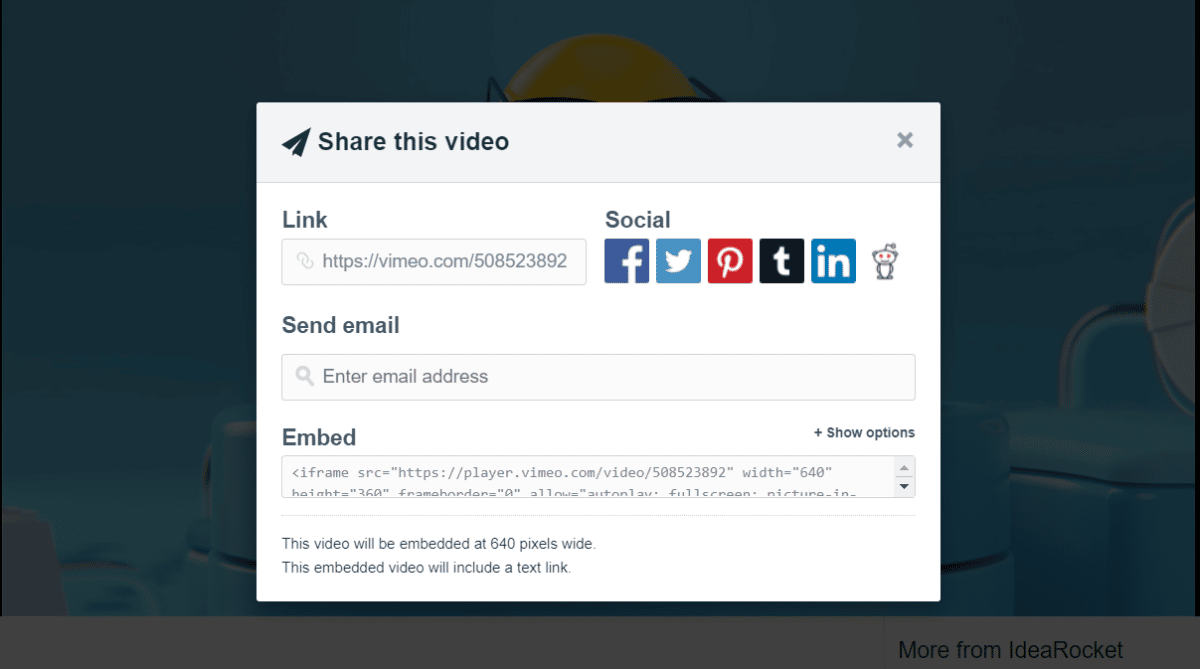
Pro Tip: Wherever possible, upload directly to your social media account rather than sharing a link from a hosting platform. Most social media channels prefer native video.
12. Create a Social Media Ad
You don’t have to create a paid social media ad campaign for every video. But a few well-chosen ads can help you increase awareness, boost viewership, and maximize reach. Before you promote a video ask yourself:
- Who is the ideal audience for this video?
- What is my budget for an ad campaign?
- What am I hoping to accomplish with this ad?
- How will I track and measure success?
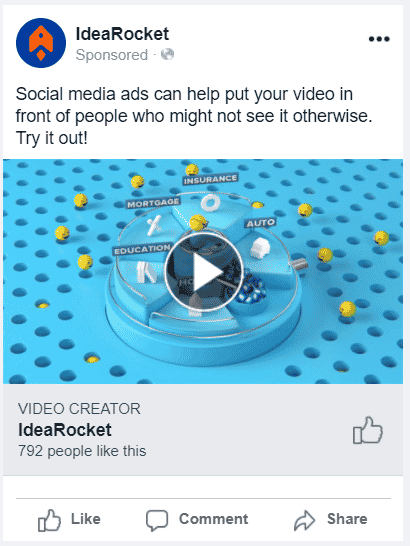
Pro Tip: Set specific goals for your video ad so you can easily measure whether it’s performing the way you want it too. Clear goals can also help you pick the right paid social channel for your video ad.
13. Draft A Blog Post
Video promotion blog posts can take several forms. The simplest option is to embed the video and include a short description. You could also post the video with a full transcription for those who prefer to read. Or, you might write a post that expands on an idea in your video. Then embed or include a link to the video in your blog post.

Pro Tip: Surrounding your video with relevant text and keywords helps it rank on Google and other search engines. It also gives viewers another way to engage with your brand and content.
14. Send Out An Email
If you have an email list, you don’t have to rely on your blog and social media alone for video promotion. Share videos with people who already follow you through email. You can do this as a stand-alone message or as part of your regularly scheduled newsletter. Use your GIF, description and thumbnail to make the video irresistible to your list subscribers.
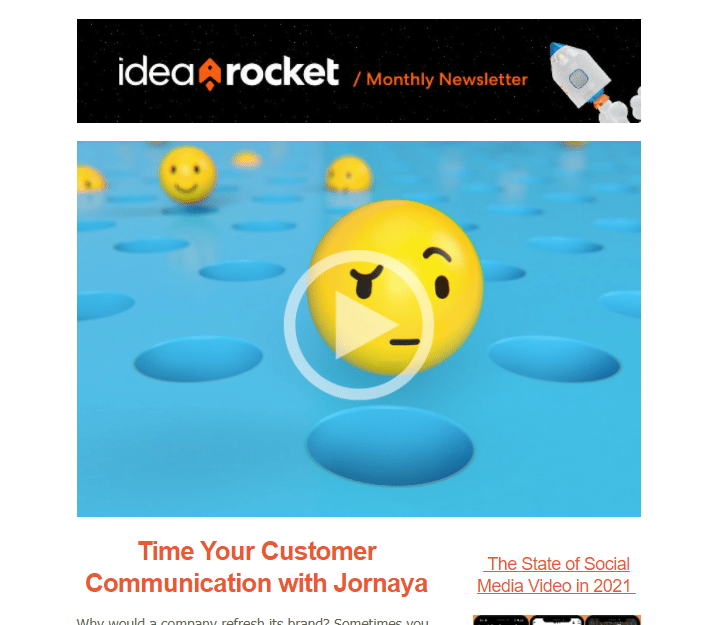
Pro Tip: Join the IdeaRocket mailing list using the form at the end of this post. You’ll get a monthly newsletter with the latest video industry insight, marketing advice, and pro tips plus a free ebook.
15. Write a Video Press Release
Press releases might sound old school, but they really do work for video promotion. If your video is newsworthy, time-sensitive, or seasonal, a press release can help you get exposure.
Journalists are busy, so when a press release is packed with timely information and a video, they’re thrilled that someone has done a lot of the work for them. One study found that PR with embedded media increases engagement by 55%.
Attach a link to your video at the top of the press release, and include a thumbnail. You can send your press release directly to bloggers, podcasters and journalists or post it on relevant PR sites like Newswire.
Pro Tip: If your press release earns you some coverage, link to the story and use that to further promote your brand. Then create a press page on your site to show your authority and help you earn even more press in the future.
Phase 3: Reach Out to Relevant Audiences
Targeted outreach can help you reach specific people who might gain value from watching your video. These people are likely to interact, convert, or share it with others. Steps 16 through 18 on our video promotion checklist show you how to find and approach these helpful people.
16. Recruit Relevant Influencers
Think about the people in your industry who might be interested enough in this video to like and potentially share it with their own followers. This could be a formal arrangement with a B2B influencer, but it doesn’t have to be.
If you have a professional relationship with someone who might be willing to share your video, it can be as easy as sending the person a message or tagging them on social media. See the example in the screenshot below.
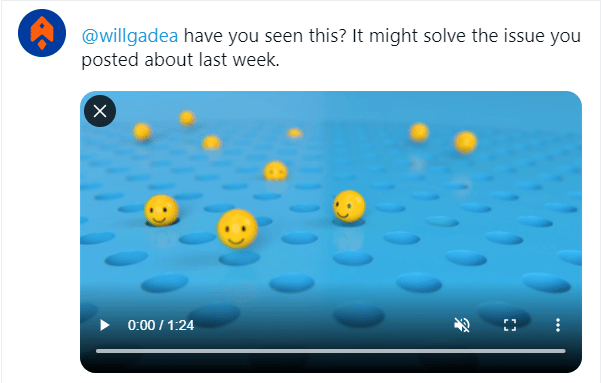
Pro tip: Don’t overuse this option. Make sure the person you tag really would get value from the video. If it doesn’t feel relevant to them, they’ll ignore you. Worse, they might ignore future messages from you because you’ll gain a reputation as a spammer.
17. Answer Questions on Public Forums
People use the internet to find answers to problems. One of the most popular ways to get answers to your questions is by visiting Q&A sites like Quora. Search Quora for relevant keywords that have to do with your business and jump in!
Answer questions with simple direct responses that include a link to your video. A popular Quora response featuring your video (with a lot of upvotes) can drive a surprising amount of traffic to your site.
You can use the same video promotion tactic on Reddit. Make sure that you’re offering useful information that directly answers the question being asked. Remember to always follow community guidelines for the subreddit you’re posting in.
18. Enlist Your Team to Share
Make sure everyone on your marketing and sales teams has access to a sharable version of the video. They should be able to easily send it to a potential client or post it to their own social media accounts to help spread the word. You might even want to give the sales team talking points.
For example:
- This video answers the following questions…
- Share this video with customers interested in these topics…
- Use this video to overcome the following objections…
By giving your sales team access to your video library, you help them make sales! Now that’s really getting the most out of your video.
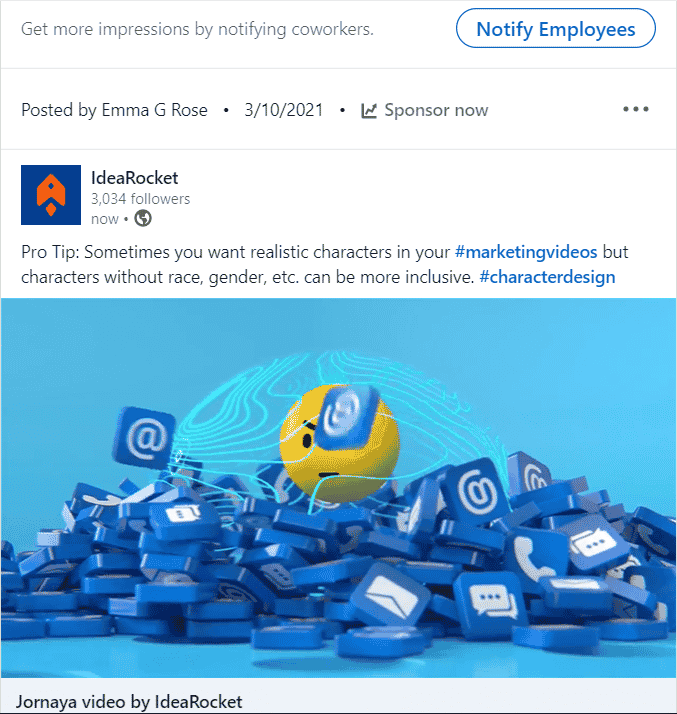
Pro Tip: As shown above, LinkedIn gives you a “notify employees” button which will automatically let all of your team members who are on LinkedIn know that a new video has been posted. It’s a simple way to maximize video promotion.
When to Use This Video Promotion Checklist
Use this video promotion checklist to maximize results on every video you create. Preparing, sharing, and reaching out makes sure that your ideal audience discovers your video. More eyes on your content means you’re more likely to meet your goals.
Of course, all of this works best when you start with a high-quality video that engages your potential customers. That’s where IdeaRocket comes in. We create videos in a variety of techniques such as 2d and 3d animation, whiteboard and live action, and for diverse uses such as explainer videos, HR videos, healthcare videos, and animated commercials. Contact one of our video creation experts today to get started.